Jakarta, December 17, 2021 – Buying a new car is one of the many items on the list of year-end resolutions made by most people. Moreover, 2022 is seen as the right time to own a personal vehicle, as the credit situation has begun to gradually improve.
As of last October, the Indonesian Automotive Industry Association (Gaikindo) reported that car sales in 2021 grew rapidly by 67 percent, with 703,089 units sold compared to the same period last year. This growth is expected to continue, given that the 0 percent down payment (DP) program for car and motorcycle purchases has been officially extended through the end of 2022, and the PPnBM tax discount incentive has also been extended through the end of this year.
Yohanes Arts Abimanyu, Managing Director of PEFINDO’s IdScore Credit Bureau, noted that these policies—aimed at boosting consumer purchasing power, particularly in the motor vehicle sector—are expected to further increase the demand for credit itself. “Buying a car is a major decision for most people. Therefore, before applying for credit, it is important for every individual to check their credit score to determine their creditworthiness, as well as to understand how banks or leasing companies assess applications and the likelihood of their credit request being approved,” said Abimanyu.
On a separate occasion, Suwandi Wiratno, Chairman of the Indonesian Finance Companies Association (APPI), stated that the rising number of motor vehicle orders is a driver of business growth in the finance company sector. APPI noted that the industry’s financing receivables contracted by 18 percent in 2020; however, by the end of October 2021, the figure had improved to a contraction of 5.5 percent (year-over-year). This was driven by rising sales of two- and four-wheeled vehicles since early 2021, particularly four-wheeled vehicle sales, which were significantly boosted by the Government-Bearing Luxury Goods Sales Tax (PPnBM DTP) incentive from April through December 2021. This incentive boosted public interest in purchasing new vehicles.
Despite the growth in vehicle purchase orders and the increase in four-wheeled vehicle loan potential, financing companies continue to prioritize the principle of prudence in maintaining credit quality. “PEFINDO Credit Bureau IdScore, as a partner, has been very helpful to financing companies in maintaining good receivables quality,” said Suwandi
To ensure that the momentum of buying a new car at the end of the year runs smoothly, PEFINDO Credit Bureau shares several tips for applying for a car loan that are easy and involve minimal risk.
Table of Contents:
Tips for Applying for a Car Loan from MyIdScore
-
Understand the Down Payment Amount, Monthly Installments, and Other Fees
The first step you can take before applying for a car loan is to understand the interest rate and down payment amount, as these will affect your monthly payments and loan term. You should also be aware of other costs, such as origination fees, administrative fees, and other related charges.
-
Check Your Ability to Pay Based on Your Credit History
Before applying for a loan, it’s important to assess your future financial capacity—specifically, whether you, as a prospective borrower, will be able to fulfill your loan obligations until the loan is fully repaid. Equally important is verifying whether your credit information is up to date and reflects your current circumstances—such as your address, employment status, or the status of closed or active credit accounts. Inaccurate data often causes loan applications to be delayed or even rejected.
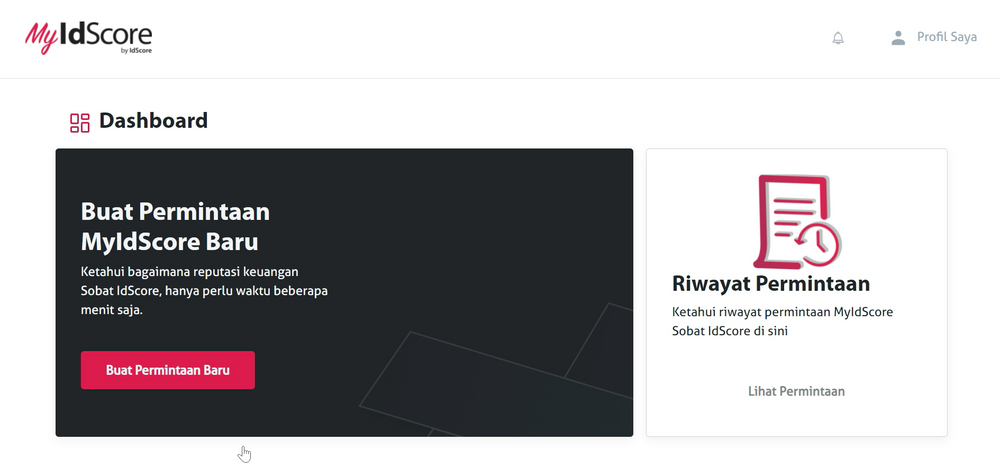
Now, checking your credit history and credit score is easier than ever thanks to MyIdScore. You can independently check your credit report more quickly and easily via the website (www.myidscore.id). In just a short time, you can obtain your historical credit report, credit score, risk profile, probability of default, and other relevant information. This information will be useful when preparing to apply for a car loan, assessing your chances of getting approved, and helping you correct or update your credit data.
-
Understanding the 5C Principles
In addition to ensuring a healthy credit score through MyIdScore, you also need to understand the 5C principles (Character, Capacity, Capital, Condition, and Collateral), which are typically used in the credit analysis process by financial institutions. First, Character—or the personality of the prospective borrower—refers to someone who has the good faith to complete installment payments. “Capacity” refers to the ability to manage personal finances, while “Capital” refers to the value of assets owned by the prospective borrower. “Collateral,” meanwhile, is a crucial factor because the value of the collateral or security provided determines whether a loan application is approved or rejected. Finally, “Condition” refers to external factors that may influence the decision, such as the borrower’s age, the country’s economic conditions, and others. You must ensure these five aspects are met before a lender will grant you a loan.
-
Choose Your Financial Institution Wisely
There are many types of credit providers, but make sure you deal with a credible, trustworthy institution with a good reputation. Applying for a loan through a bank will offer lower interest rates, but the process takes longer and involves more complicated documentation requirements. Meanwhile, the loan application process through a financing or leasing institution will be faster. However, the costs involved will be higher, and the interest rates offered are typically higher as well.
-
Design a New Financial Plan
Deciding to take out a car loan will drastically change your financial allocation. Given this situation, it is highly recommended that prospective borrowers begin designing a financial plan that accounts for these new expenses. Create a financial plan that aligns with your current financial situation so that your car loan payments are well-planned until the loan is paid off.