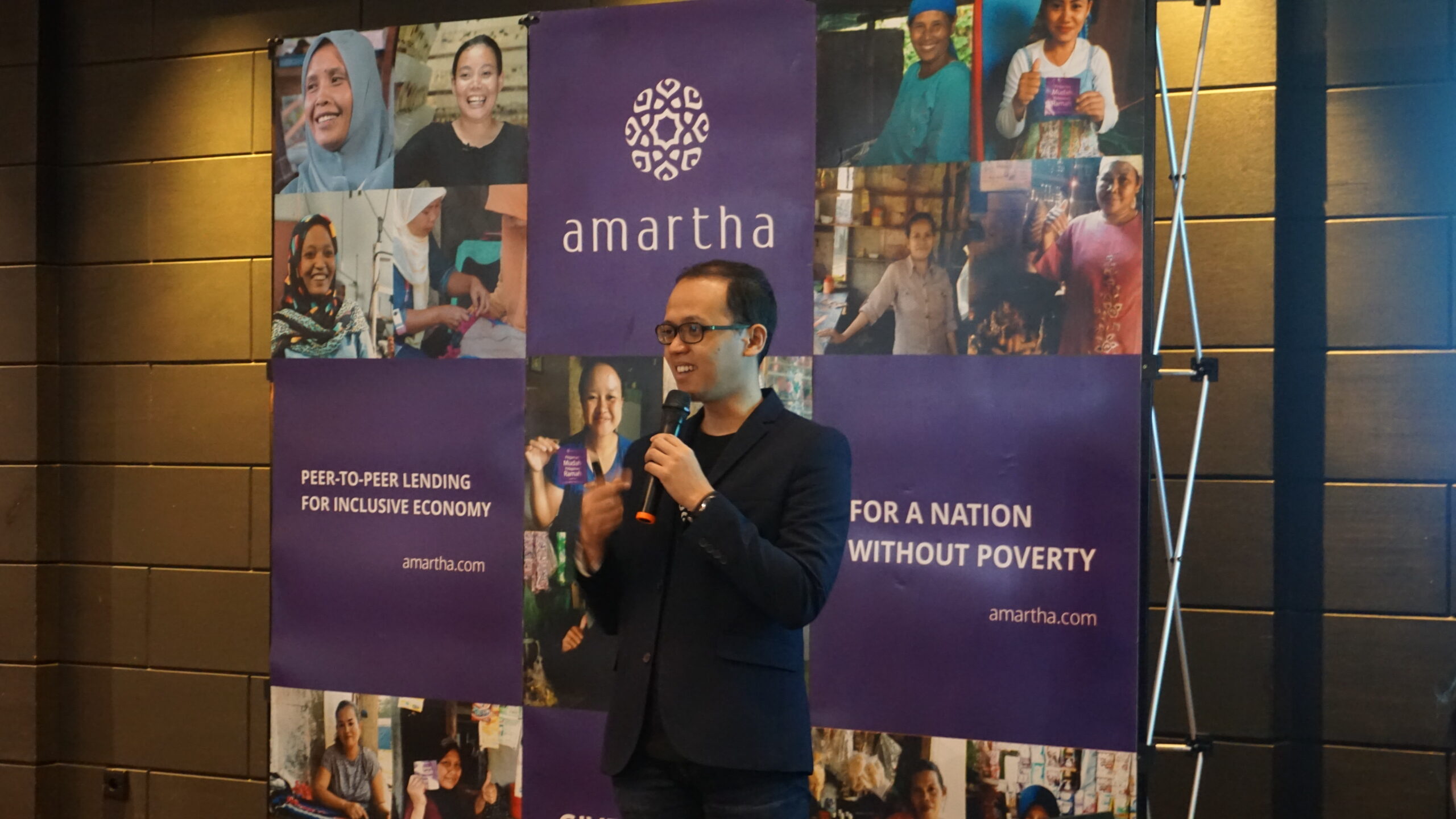
Amartha Fintek Helps Reduce Poverty in Rural Areas
Press Release: For Immediate Release
Jakarta, April 30, 2019
Over the past two years, the number of Amartha’s female partners living below the poverty line has decreased by 22 percent
Throughout 2018, Amartha, a trusted peer-to-peer lending fintech company, successfully improved the well-being of hundreds of thousands of its partners—female microentrepreneurs in rural areas. Data from the 2018 Sustainable Accountability Report reveals that the (average) monthly income of Amartha’s rural female partners rose from Rp 4.2 million to Rp 6.7 million, representing a 59 percent increase.
This dramatic increase in the income of Amartha’s female partners—which has contributed to a reduction in poverty rates—was achieved through the following series of poverty intervention programs:
- Providing access to capital so that Amartha’s female partners in rural areas can start and grow their businesses
- Providing entrepreneurship and financial literacy training so that Amartha’s female partners can manage their finances to grow their businesses
- Increasing the purchasing power of rural women, which ultimately improves their quality of life
“What communities need to be productive is not just capital, but also guidance so they can use their capital wisely to ensure the sustainability of their businesses,” said Amartha’s CEO and Founder, Andi Taufan Garuda Putra.
As the incomes of Amartha’s female micro-entrepreneur partners have risen, 52 percent of them have been able to set aside money to purchase business-supporting equipment, such as motorcycles and renovations for their shops. Amartha partners can now even allocate their business profits toward consumer goods, such as cell phones and televisions.
“After receiving capital from Amartha, my business has grown. I used to be just a betta fish farmer, but now I’m able to buy betta fish from other farmers and run a kiosk in Jakarta,” said Mrs. Apsiah from the village of Ciseeng in Bogor, who has been an Amartha partner since 2010.
In addition to capital and mentoring, thousands of rural women micro-entrepreneurs who are Amartha partners have also benefited from a program that distributed 7,039 pairs of eyeglasses. This is because many of them suffer from nearsightedness, which prevents them from effectively managing their finances. The eyeglasses have proven to help one in three Amartha partners, who report a four-hour daily increase in their productivity.
The increase in income has also had a positive impact on reducing the poverty rate among Amartha’s partners. In 2016, 63 percent of Amartha’s total partners were still living below the poverty line. By the end of 2018, the number of Amartha partners living below the poverty line had dropped dramatically to 41 percent. This reflects a decrease in the proportion of the poor population among Amartha partners.
The decline in the poverty rate among Amartha’s partners has actually outpaced the national average, successfully reducing the number of Amartha partners who were originally below the poverty line by 22 percent. According to data from the Central Statistics Agency, the average annual decline in the poverty rate is 1.1 percent.
“This proves that fintech companies can have a positive impact if we all focus not only on pursuing profit but also on helping those in need,” continued Andi Taufan Garuda Putra.

About Amartha
As of April 2019, Amartha had disbursed more than Rp 1 trillion in business capital to 223,000 women microentrepreneurs spread across 3,500 villages throughout Indonesia. After disbursing the capital, Amartha, through 1,100 field officers in the villages, provides mentoring and financial literacy training to all of its partners.
Amartha is a trusted peer-to-peer (P2P) lending fintech company focused on helping hundreds of thousands of female microentrepreneurs in rural areas. Amartha connects female microentrepreneurs in need of working capital with individuals or companies seeking alternative investment opportunities with attractive returns, while simultaneously creating a positive social impact—such as improving the quality of life for hundreds of thousands of rural women.