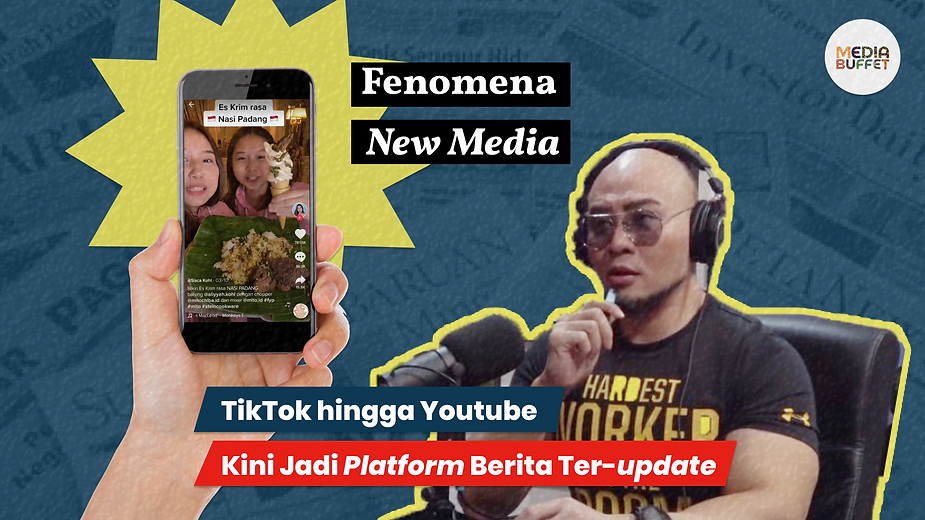
The New Media Phenomenon: From TikTok to YouTube, These Platforms Are Now the Go-To Sources for the Latest News
Amid the rapid pace of change, new media platforms are emerging at an ever-faster rate. This has had a significant impact on shifts in people’s behavior when it comes to consuming information.
According to the “Digital 2021: Global Overview Reports” survey by Hootsuite and We Are Social, the number of internet users worldwide has reached 4.66 billion. Of that total, 4.22 billion are social media users. This high number of social media users is also reflected in the time spent on these platforms, which averages 2 hours and 25 minutes per day.
Table of Contents:
New Media: A New Way to Get News
In the past, newspapers, radio, and television were the most up-to-date sources of information and were widely consumed. However, people are now turning to modern information channels, often referred to as “new media.” This term encompasses various types of communication media that arise from the interaction between humans and computers—specifically, the internet.
The most commonly consumed form of new media is social media. Social media is no longer merely a place for online networking but has become a platform for accurate and up-to-date information. The news presented is highly diverse and can change very quickly as information evolves.
Consequently, it is now not uncommon for us to be exposed to a news story via social media before it appears in traditional mass media such as TV, newspapers, magazines, and so on. In addition to its highly up-to-date nature, this is because social media can deliver information in a matter of seconds—even via a smartphone. Meanwhile, traditional media requires several specific processing steps before news can finally reach the public.
TikTok and YouTube Are Now the Go-To Sources for the Latest Information
Since 2020, TikTok has been the most downloaded app. TikTok has become a platform beloved by many demographics—not just millennials; many baby boomers and Gen Zers are also using the app. In addition to being easy to use for a wide range of people, TikTok also features many videos that resonate with its users. In fact, Indonesia has the highest number of downloads, accounting for 11 percent of the total downloads—over 63.3 million installations worldwide.
TikTok is indeed a rather unique platform; by featuring short videos under 5 minutes in length, TikTok users—commonly known as “TikTokers”—can watch informative videos covering a wide variety of topics. These range from videos discussing budget-friendly room decor, how to make iced coffee with milk at home, and reviews of trending hangout spots, to the latest viral stories about domestic or international events that are the talk of the TikTok community.
One example of a viral story is a customer complaint against a well-known cell phone store in Indonesia, which was accused of refusing to serve customers dressed in modest clothing. The video, which initially appeared only on TikTok, suddenly went viral as it became a hot topic of conversation among social media users. Online media outlets quickly picked up on this viral TikTok story and turned it into content for a wider audience.
Just like TikTok, YouTube has also become one of the most popular platforms today. This high popularity stems from the increasing utility of this video platform for internet users. Since many users visit YouTube not only for entertainment but also to find tutorials, educational content, and the latest news—and can even watch live TV broadcasts via YouTube—it’s no surprise that many people are switching from television to YouTube.
In fact, YouTube has now become a useful platform for clarifying any conflicts that arise. One example is the YouTube channel “Deddy Corbuzier.” He has turned his YouTube channel into a platform for parties involved in viral cases. From political scandals involving politicians to personal scandals involving top celebrities, all have been addressed in Deddy Corbuzier’s YouTube content. Recently, Deddy Corbuzier’s YouTube podcast has been consistently drawing large audiences due to his clarification of the viral cheating scandal involving a chess player, as well as his live chess matches, which have attracted millions of viewers.
By presenting information in a unique format and addressing current issues, Deddy Corbuzier’s podcast has become the go-to platform for people seeking the latest updates on topics trending across the online community. This is precisely the kind of content we don’t often find in traditional media, due to differences in concepts and systems.
New media has brought about significant changes, particularly in our daily lives. Newspapers, TV, radio, magazines, and other traditional media outlets have now begun transitioning to digital formats to maintain their relevance and compete with new media. It’s not uncommon for traditional media outlets that can’t keep up to eventually go out of business. Now, apps like TikTok and YouTube have become the go-to sources for the public to access the latest information. As a result, it’s not just Millennials and Generation X, but even older generations are now adapting to use the internet and social media to more easily stay connected and up-to-date with a wide range of current information.
Written by Savira Chesaria, PR Consultant Intern at Media Buffet