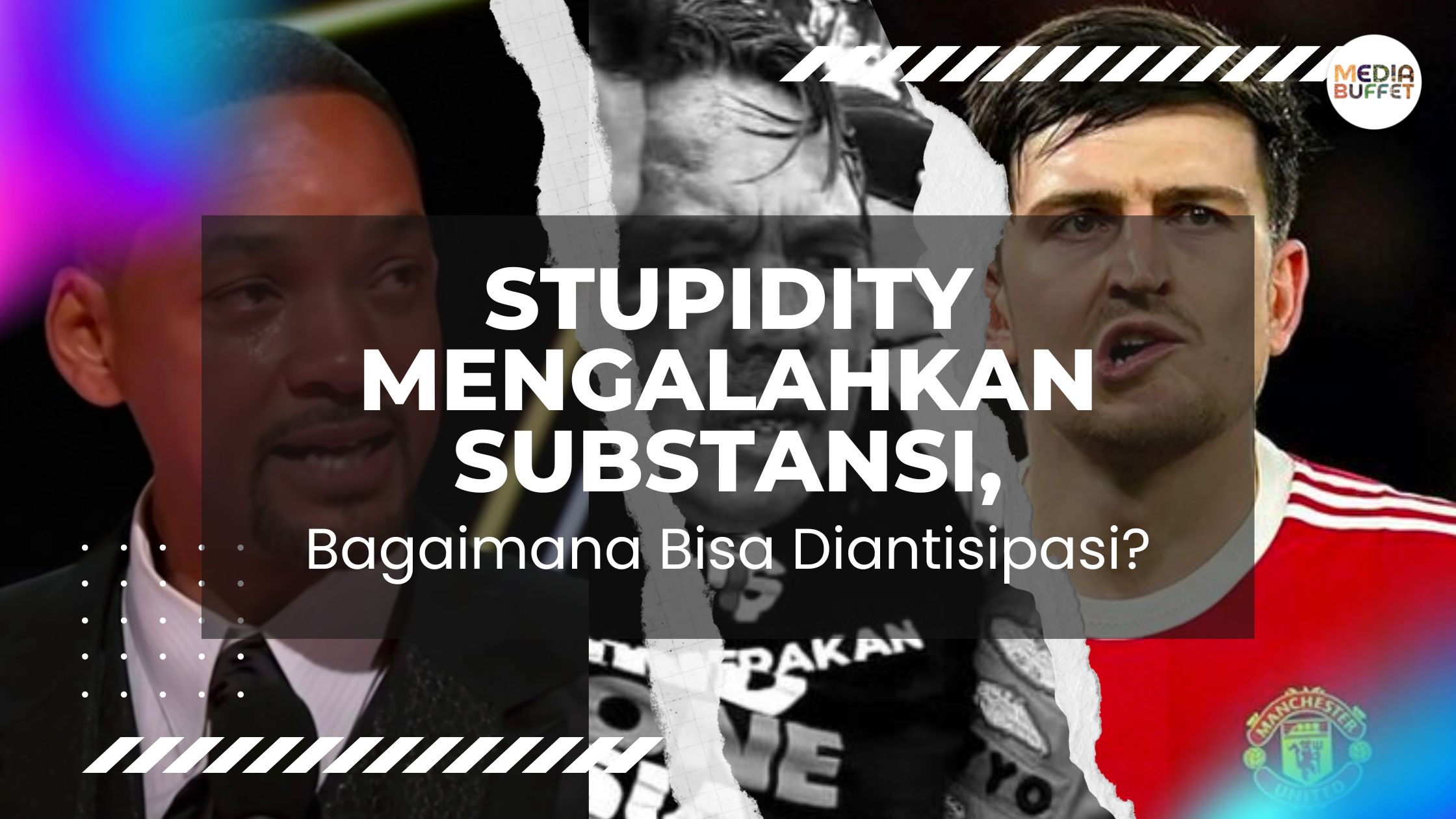
It seems that these days, netizens’ attention on social media is increasingly drawn to eccentric, outlandish, and attention-grabbing actions. If that’s the case, what about the core substance of an event or occurrence—which should be the public’s primary focus? This edition of Media Buffet PR will begin with three case studies that support the argument in the first sentence.
Table of Contents:
When Stupidity Overshadows Substance
Harry Maguire, the World’s Most Expensive Defender

Have you heard of Harry Maguire? You soccer fans surely know this most expensive defender. After shining at Leicester City, Manchester United didn’t hesitate to sign the now 29-year-old defender for 80 million pounds—or about 1.5 trillion rupiah. Crazy! That price tag instantly made him the world’s most expensive defender.
Expectations were certainly high for Maguire. But what did MU get? Instead of a stronger defense, they’ve been met with constant jeers and ridicule. Maguire has consistently made blunders, to the point where he’s become the butt of jokes on social media.
The climax came during Manchester United’s match against Norwich City. Maguire made yet another blunder, kicking Pogba in the head and injuring him. Pogba looked extremely upset after the incident. After the match, netizens’ attention was entirely focused on that incident. There were so many memes of Maguire kicking Pogba circulating on social media that many people didn’t even realize Cristiano Ronaldo had scored a hat trick in that match!
Read also: The Phenomenon of Personal Branding Among Athletes | Michael Jordan & Cristiano Ronaldo: Unparalleled Branding Stories
Will Smith’s Legendary Slap

Do you know which actors and actresses won Oscars this year? Who managed to win or at least get nominated? Ah, none of that matters—what’s important is that Will Smith slapped Chris Rock, on stage, and live!
That incident is deeply etched in the minds of people around the world—even now, memes of Will Smith slapping Chris Rock are still popping up everywhere. The list of 2022 Oscar winners in every category? Who cares!
Don’t believe me? Google “Oscar 2022” right now and see what comes up in the news. Even now, news outlets are still discussing Will Smith’s fate after slapping Chris Rock, as well as his mother’s reaction to the incident from a month ago.
Ade Armando Overwhelmed by the Crowd > The Demands of the Protest

Last but not least is the protest. It’s actually understandable that media attention spreads in all directions during any protest, given that protests are complex events filled with various “side” incidents. But if attention is almost entirely focused on those “side” events, isn’t all the effort and sweat the students poured into planning and voicing their demands to the government all for nothing?
In fact, the demonstration succeeded in bringing the students face-to-face with representatives of the House of Representatives. The demands were conveyed effectively, but the attention of the media and netizens had already been split in two. A small portion followed the course of the demonstration, while the rest focused on watching Ade Armando get beaten up, along with unique facts about Ade Armando, the eccentric and controversial professor.
Key Takeaways
From the three incidents above, we can learn that a “side” event can sometimes garner far more attention than the main agenda at hand.
This can be dangerous if we, as a Jakarta public relations agency, have carefully crafted the narrative we want to convey for a particular event. Netizens’ attention might end up shifting to an incident they feel isn’t worth paying attention to. However, striking incidents like these often succeed in making people “look away” from the main stage.
Could this be an effective strategy for capturing attention?