Startup CEOs Often Make Mistakes and “Invite” Crises: This Is Where Public Relations Comes In
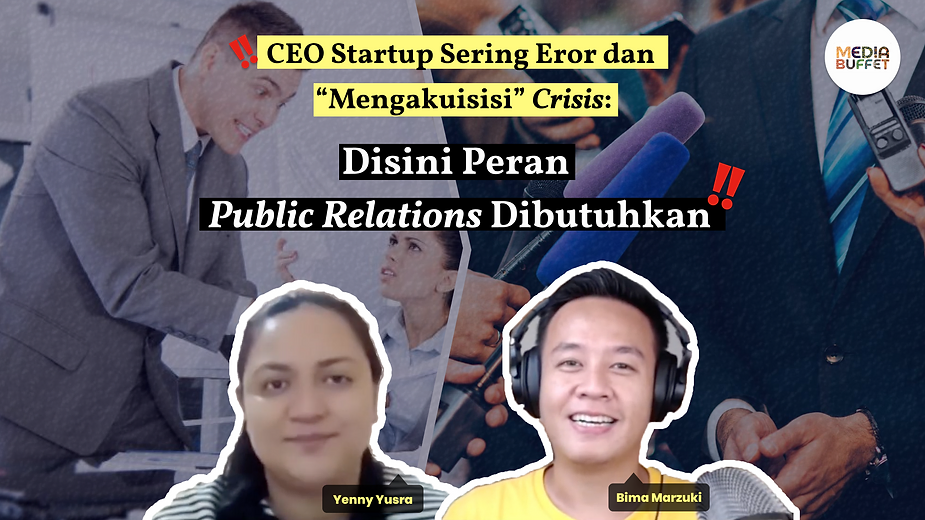
“When a startup faces a major crisis on social media, it must pay close attention to the conversations taking place there. Only then, based on that data, can it decide what steps to take next,” said Bima Marzuki, CEO and Founder of Media Buffet PR, in a video on DSCUSSION Daily Social TV.
Crises seem to be a frequent occurrence among startups these days. Issues that are typically blown out of proportion on social media—along with the steps taken by startups to address them—are inevitably the subject of discussion among netizens and make headlines.
Table of Contents:
What Is a PR Crisis?
A PR crisis refers to any negative activity or situation that can damage a company’s reputation, have devastating consequences for its operations, and strain the relationship between the company and its stakeholders.
There is a difference between an issue and a crisis. A crisis certainly begins with an issue, but not every issue necessarily escalates into a crisis. The approach to handling an issue versus a crisis is also distinctly different. An issue can become a crisis if it disrupts the company’s workflow, disturbs executives and employees, and has the potential to damage the brand’s reputation. Therefore, it’s essential to first identify the issue so that you can take the next steps without acting rashly.
The impacts of a PR crisis vary widely, ranging from a tarnished corporate reputation to, in the worst-case scenario, bankruptcy. That is why a company cannot afford to underestimate a PR crisis.
So, What Should the PR Team Do?
According to our CEO, Bima Marzuki, when addressing the crises frequently faced by startups, today’s crises often originate from social media. Therefore, before a crisis erupts, the PR team should closely monitor social media.
The next step is to listen. To craft effective messages, a PR professional must be a good listener. If a startup faces a crisis on social media, the company’s PR team must identify where the issue originated, how many people are discussing it, the context surrounding it, and who the key influencers are.
This information will be useful in determining the appropriate next steps. It doesn’t stop there; according to Bima, the post-recovery phase is just as important. Its purpose is to address the impact caused by the crisis.
You can watch the full interview on the DSCUSSION Daily Social TV video, hosted by Yenny Yusra, which covers Bima Marzuki’s experience in building a startup’s presence through public relations campaigns and how public relations can help startups survive in the competitive Indonesian market—from building brand awareness, credibility, to managing PR crises.
Written by Hasna Fithiryah, PR Consultant Intern at Media Buffet