Community relations is nothing new in the field of public relations. In some companies, community relations is viewed as a way to implement Corporate Social Responsibility (CSR). In reality, the two have different meanings. Community relations refers to the relationship or communication between an organization and a community or society, whereas Corporate Social Responsibility refers to a company’s social responsibility toward society. At Media Buffet PR, community relations is one of the ways we help clients achieve results that go beyond mere publicity, as we did with Paxel.
Paxel is one example of a startup that has felt the impact of a digital PR >< community relations communication strategy. After receiving support from Media Buffet PR in 2019–2020 through the “Public Relations >< Community” campaign, Paxel’s user growth surged by 650% in just one year.
Read also: SEO and Public Relations: Taking a Corporate Website From Zero to Hero
Being a late entrant in Indonesia’s already saturated logistics industry was certainly no easy feat and posed a unique challenge for Paxel. Yet, the services Paxel offers are quite innovative, featuring same-day delivery between cities and provinces—a service not offered by other logistics companies. However, the product alone isn’t strong enough for Paxel to compete with rivals in the logistics industry. Many of these competitors are established, large players capable of scaling their businesses to meet their desired targets. A strong, targeted, and measurable communication strategy is needed for Paxel to break into the logistics market.
How to Combine PR & Community Relations?
Before Paxel approached Media Buffet, they had actually already carried out various PR and marketing activities. They had pitched stories to the media, distributed press releases, and collaborated with bloggers; however, these efforts were scattered, unfocused, and inconsistent, leading Paxel to feel that the impact wasn’t strong enough for their business.
That’s when Paxel turned to Media Buffet to help them develop a more solid communication strategy. Media Buffet’s first step was to redefine Paxel’s brand positioning by designing a differentiation strategy that set Paxel apart from established players, so the public could understand the difference between Paxel and other logistics services. By changing Paxel’s brand positioning, Media Buffet identified the potential target audience and decided to focus on a specific segment as part of the communication strategy: food-related small and medium enterprises (SMEs). In line with this, Media Buffet’s approach extended beyond traditional media to actively engage the food SME community.

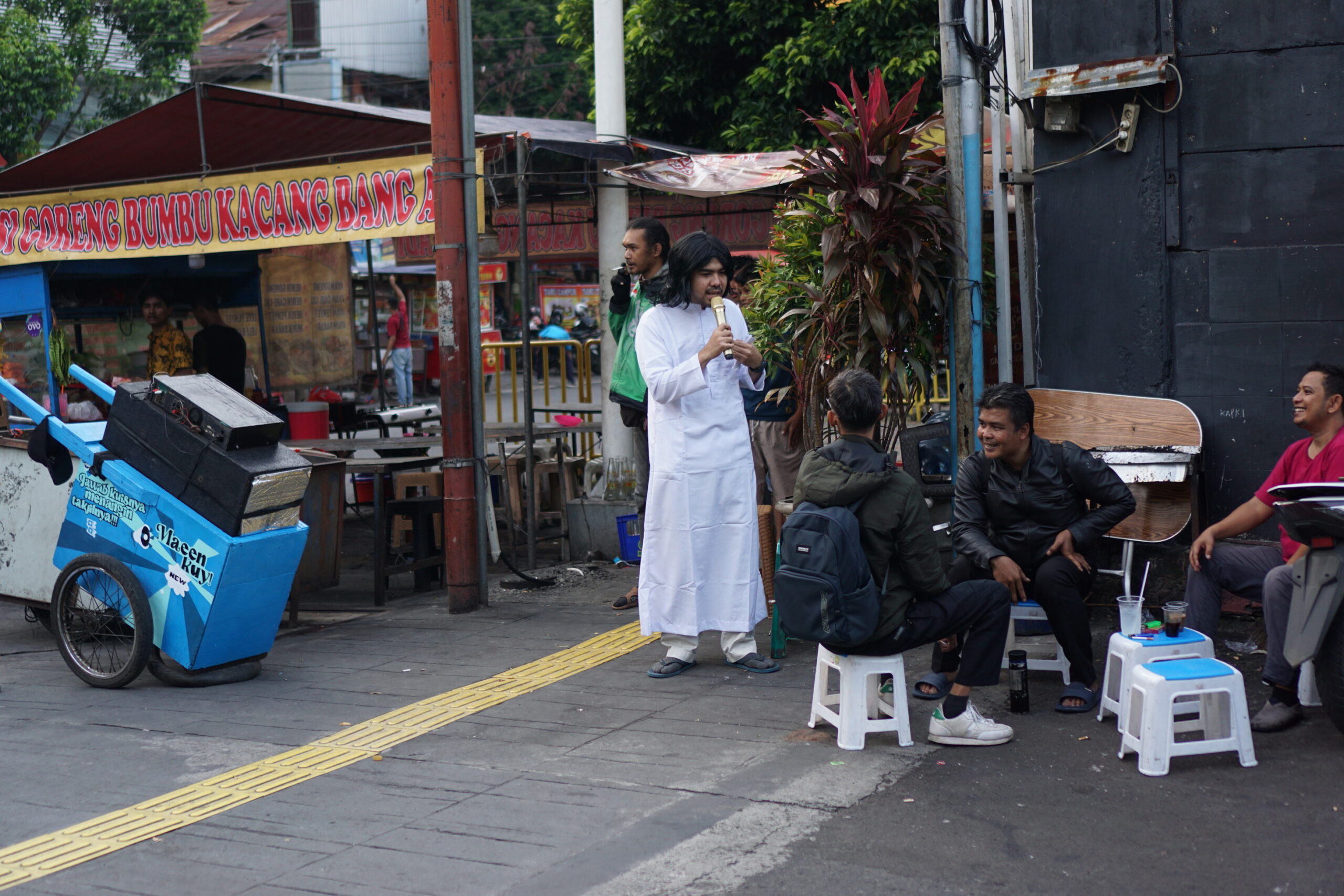
Throughout the one-year campaign, Paxel hosted a series of community events titled #PaxelNGopi in several cities across Java, inviting various food SME communities as well as the media. By involving several Paxel partners, such as Bu Nanik from Pisang Goreng Bu Nanik, Gudeg Legendaris Yu Djum, and Warung Pintar, Paxel, as a brand, chose the specific audience with which it would build rapport.
The implementation of community relations, combined with building Paxel’s brand positioning as a logistics startup for food SMEs offering same-day delivery through the media, enabled Paxel to achieve exponential business growth. Deliveries surged to over 2.6 million—up from just around 572k in a single year—alongside a spike in Paxel users from just 270k to 1.2 million within a year. This success wasn’t solely due to a change in communication strategy; there was also an underlying factor—the quality of service that pioneered same-day delivery in Indonesia.
From this case, we can learn that a public relations campaign cannot stand alone in building brand positioning. Integrating public relations with community relations is a viable approach to achieving greater impact. If your brand is facing similar challenges in building brand positioning, Media Buffet PR is open to discussing the right steps to ensure your communication strategy generates impact for the sustainability of your business.