For brands, attending a big event is often seen as an opportunity to gain media exposure. Logos appear at various points, media is present at locations, content is spread on social media, and the public is starting to see the brand's involvement in this momentum. However, in brand communication, exposure alone is not enough.
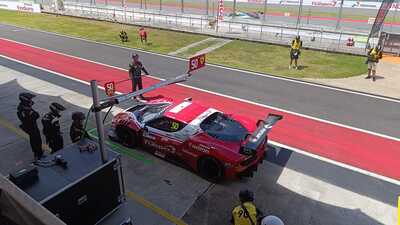
The more important question is: does the brand's presence really build the right perception? Does the public only see the brand, or is it starting to associate it with the values it wants to build? As an international motorsport event, this event has a strong attraction: world-class race tracks, professional racers, the automotive community, and media attention.
For automotive and lubricant brands, motorsport marketing is not just a promotional stage. The world of racing brings very relevant values, such as performance, precision, endurance, technology and speed. If managed properly, events like this can help brands build stronger associations with quality and performance.
This is where Media Buffet sees that a big event needs to be read further than just the amount of news. Media exposure needs to be translated into reputational insight: how the brand is reported, how the narrative is formed, and how the public responds.
Background: When Media Exposure Isn't Enough
One of the biggest challenges in event communication is ensuring the brand is not only visible, but also relevant to the main story of the event. In the context of motorsport, this challenge becomes even more interesting. Racing events have strong visuals, an intense atmosphere, and great appeal to the media. However, without the right communication strategy, the brand's presence can stop being a logo placement.
Brands may be visible at the venue, mentioned in communications materials, or appear in documentation. However, the public does not necessarily understand why the brand exists and what values it wants to build. For lubricant brands like Pertamina Fastron, involvement in motorsport has very strong communication potential. Lubricants are directly related to engine performance, durability and vehicle technology. When a brand is present on the race track, there is an opportunity to strengthen the perception that the brand is close to the world of high performance.
However, this potential still needs to be managed. Brands need narratives that can bridge events, products and reputation. Therefore, the communication challenge is not only how to get the brand in the news, but how to ensure that the news carries the right context.
Strategy: Choosing the Right Channels and Directing the Narrative
To answer this challenge, GT World Challenge Asia's communication activities do not only rely on one channel. The strategy is built through a combination of media visits, press release distribution, photo releases, media monitoring, as well as selecting homeless media that is relevant to automotive and sports audiences.
One important step is choosing media and homeless media that suit the character of the event. In motorsport events, the audience does not only come from formal news readers, but also from the automotive community, racing fans and the digital public who follow event developments via social media.
Therefore, the selection of homeless media cannot be done randomly. The channel chosen needs to be close to automotive, sports, lifestyle or popular conversation topics that are able to make the event narrative lighter and easier for the audience to accept.
This approach helps brands reach two communication spaces at once: conventional media which gives news credibility, and social media which expands conversations more naturally.
Apart from that, media visits are an important part of building quality coverage. By being present directly at the location, journalists and homeless media can see the atmosphere of the event, follow the agenda, capture visual moments, and explore the angles that are most interesting to their audience.
However, an effective media visit does not only mean inviting the media to the venue. The media still needs to have a clear context so that the stories that emerge cannot be separated from the brand's communication objectives.
In the case of GT World Challenge Asia, the communication angle is directed so that the news does not just stop at the race results. The narrative that is built also includes the performance of racers, the presence of Mandalika as an international circuit, support for national brands, as well as the development of the Indonesian motorsport ecosystem.
In this way, the media still has space to explore stories from the field, but still within the narrative corridor that is relevant to the brand.
Key Takeaway: Exposure Should Be Read as a Reputational Asset
The GT World Challenge Asia case shows that large events can be powerful communications assets, but only if the resulting exposure is managed and read strategically.
For brands, attending big events is the first step. However, to build a reputation, brands need to ensure that their presence has a clear meaning to the public.
What is the main message you want to reinforce?
How is the brand associated with the event?
What media and channels are most appropriate?
What angle appears in the news?
Is the narrative positive?
Did the public respond well?
What insights can be used for the next communication strategy?
These questions are an important part of Media Buffet's work in helping brands understand the impact of communications more fully.
Through media monitoring and media intelligence, Media Buffet helps brands see coverage not just as an end result, but as a source of insight. From every news report, upload and audience response, brands can read how they are positioned in the public space.
In the end, brand performance is not just about how often the brand appears in the media. Brand performance is about how the brand is perceived, associated and trusted.
From the race track to the newsroom, GT World Challenge Asia is an example of how properly managed communications can turn visibility into credibility, and exposure into reputation.
Author: Ravdinal