About KOMPAS's Lorem Ipsum
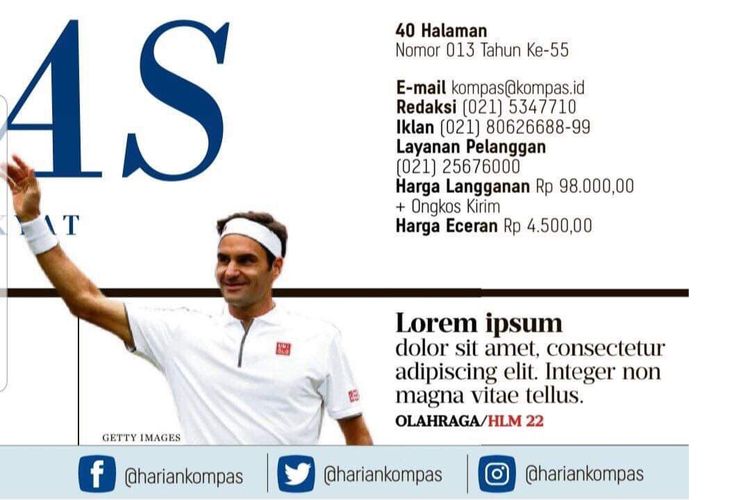
On Wednesday, July 10, 2019, we were surprised by a misprint of “Lorem Ipsum” in the KOMPAS daily. The Latin text “dolor sit amet…” was clearly displayed alongside a photo of tennis player Roger Federer in the upper right corner—a spot typically reserved for sports news.
For those in the know, this is crazy. To my knowledge, no newspaper has ever accidentally left “Lorem Ipsum” in print—let alone on the front page. What’s even crazier is that this was done by a newspaper of KOMPAS’s caliber.

Table of Contents:
The Origins of Lorem Ipsum
Lorem Ipsum itself is a sample text or dummy used in the printing and typesetting industry. Lorem Ipsum has been the standard sample text since the 1500s, when an unknown printer took a galley of type and scrambled it to make a type specimen book.(https://id.lipsum.com/)
For anyone who has worked in design—whether on websites, magazine layouts, social media templates, or presentation decks—Lorem Ipsum is usually the first thing to populate these templates, filling in the text gaps.
Looking at KOMPAS’s Lorem Ipsum image, I smiled and couldn’t wait to see what role KOMPAS would take to wrap up the day. Deep down, I hope KOMPAS takes an opportunistic approach, capitalizing on the social media conversations commenting on KOMPAS’s “Lorem Ipsum,” rather than admitting a mistake and apologizing.
“It would be interesting if tomorrow KOMPAS published an editorial discussing what Lorem Ipsum is. It would also help enlighten the nation,” said our APPRI colleague, Arya Gumilar, founder of Kayu Api Digital Reputation, in our WhatsApp group.
I agree one thousand percent. KOMPAS needs to read the situation and turn a mistake into a momentum to reinforce yet another aspect of the KOMPAS brand: endless creativity.
Last year, Bukalapak—known for its creative and offbeat marketing content—came under fire for allegedly misdating the Youth Pledge Day announcement as October 29 on one of its billboards.
Bukalapak seamlessly transformed netizens’ anger, frustration, amusement, and curiosity into extraordinary brand value. They claimed this helped today’s youth remember Youth Pledge Day through a method that was “so on-trend.”
In marketing terminology, this tactic is known as “marketing misdirection,” where a brand creates and spreads a deliberate mistake to capture its audience’s attention. The “Monster” brand also employed this strategy by sending a misdirected congratulatory message via Twitter following the 2015 Super Bowl.
This marketing misdirection tactic capitalizes on netizens’ quick reactions—commenting on, laughing at, or even criticizing something they perceive as stupid or silly. But this tactic can’t be executed by simply designing a mistake at random. The key lies in how the brand executes a plot twist that ultimately leads them to the value they hope will be associated with the brand. In Bukalapak’s case, the #SumpahPemuda incident steered them toward a nationalist brand value.
What Did KOMPAS Ultimately Do?
Back to KOMPAS’s “Lorem Ipsum.” The afternoon after the Lorem Ipsum photo went viral and became the talk of the town, KOMPAS finally announced that this was an editorial oversight rather than a marketing tactic.
Then, in the afternoon, a follow-up apology was issued, accompanied by a 30 percent discount promotion for readers who shopped on their digital platform using the code “KOMPASLOREMIPSUM.”
What will the public remember about this “Lorem Ipsum Tragedy”? For me, it’s a historic blunder by Indonesia’s most historic media outlet.
If I could rewind time to that early morning, I’d whisper to KOMPAS Editor-in-Chief Ninuk, “Don’t admit fault just yet. Let’s take a risk and think outside the box.” That’s exactly what major brands do—which is why they’ve become global leaders in their respective fields. Unfortunately, they were too panicked and too naive to admit it, yet at the same time wanted to turn the crisis into an opportunity. Hoping that after apologizing, they could boost sales with discount promotions. Hohoho… it’s not that easy, Ferguso!